BJP loss could trigger a correction

The combined interest payment for India's top listed companies, excluding financial and oil and gas firms, was up 15.2 per cent year-on-year during the six months ended March 2019, outpacing the change in net sales and operating profit.

The buyback price is at around 28 per cent premium to the current market price of Rs 67 on the Bombay Stock Exchange
The combined profit before tax of 748 companies, which have declared their results for Q1FY21, is down 46 per cent YoY. Their net sales went down by a quarter as the Covid-19 lockdown led to a sharp fall in economic activity.

Though most experts remain bullish on the banking space, they suggest investors buy only those banks whose NPAs are at a manageable level of 3% to 4% and there is credit growth or earnings visibility.
There is positive correlation between crude oil prices and Indian equities and investors can expect more upside after the recent rally in Brent crude price.

Stocks of public sector undertakings (PSUs) have been on fire in the past year as investors cheered an improvement in key operating metrics and embraced counters of these state-owned enterprises, analysts suggest. The S&P BSE PSU Index has gained over 90 per cent in the past year, rising much higher than the S&P BSE Sensex, which has rose nearly 19 per cent during this period, according to ACE Equity data. The BSE PSU Index, reports show, has delivered a compound annual growth rate (CAGR) of 28 per cent (including dividends reinvestments) over five years and risen by almost 60 per cent in the past year.

Their share in overall market capitalisation of BSE stocks has risen to a four-year high

While sales momentum from rural areas may last another three to six months, sales growth in urban areas could stage a comeback by next year's June quarter as people learn to live with the coronavirus and economic activity gradually improves in the cities.

The divestment process, however, will not be an easy affair as there are multiple stakeholders, including the employee unions, whose concerns will have to be addressed.

Automobile company Tata Motors, metals and mining major Vedanta, oil marketing firm Bharat Petroleum Corporation (BPCL), private sector IndusInd Bank, and two-wheeler major Bajaj Auto have witnessed their market cap slip below the Rs 1-trillion mark this year.

The trend in corporate earnings suggests that index earnings could fall to the levels last seen in early 2014.

sharper-than-expected economic recovery back home, analysts say, can fuel a further rally in domestic cyclicals, industrials, and financials as global central banks continue with their easy money policy.
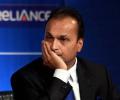
While RCom owes Indian banks close to Rs 45,000 crore, Ambani has lost close to $408 million of personal wealth year-to-date until Tuesday.

Shares of Motilal Oswal Financial Services, Edelweiss Financial Services and IIFL Holdings have all doubled in the past one year against the Sensex's 23 per cent gain.

Auto companies are now grappling with a slowdown in sales, triggered by pent up demand due to the COVID-led lockdown easing a bit and supply-side issues for raw material.

Analysts, however, suggest investors remain selective on realty stocks and buy only where there is revenue visibility and a credible promoter backing.

BSE-listed companies' market capitalisation reached Rs 197.7 trillion on January 21, against India's nominal GDP of Rs 190 trillion during 12 months ended December 2020.

Gold, which was hovering around $1,321 an ounce in January 2019, has already breached $1,600 per ounce in the past few sessions to a seven-year high.

The government is expected to dole out some populist policies, especially for the rural / farm sector while presenting the interim budget, given that the country is heading towards general elections over the next few months.

Analysts attribute the surge to a host of factors, particularly the interest shown by the retail investors in these two market segments.

Since last month, the realty (down 23%), auto (down 16%) and finance (down 14%) indices have underperformed the market by falling over 13%, as against 8% decline in the benchmark indices

In the past two months alone, four companies have garnered a cumulative Rs 22,400 crore via this route.

Jio Financial Services, a unit of Mukesh Ambani's Reliance Industries (RIL), got valued at Rs 1.66 trillion ($20 billion) following an hour-long special trading session conducted by stock exchanges on Thursday. Shares of RIL's unit got priced at Rs 261.85 apiece - higher than analysts' expectations of Rs 134-224 per share. The price was arrived at after calculating the difference between RIL's Wednesday (July 19) close of Rs 2,840 and Rs 2,580, the price discovered during the first-of-its-kind pre-trade session.

Low home loan rates by banks could put large players in an advantageous position over smaller non-bank players, believe analysts.
As many as 267 of 453 companies from the BSE500 index are trading above their consensus price targets, according to the data compiled by Bloomberg. Not all companies in the BSE500 index are tracked by analysts.

The Karnataka election is being seen as the semi-final to the 2019 general elections and appears to be heading towards a close fight

Most analysts as well as company executives say the rally in commodity prices is ill-timed coming just when firms were recovering from disruptions such as demonetisation & introduction of GST

A weak economy coupled with rising Covid-19 cases and inflation that is above RBI's comfort zone, geopolitical developments, and upcoming India Inc's second quarter results for FY21 could impact sentiment, analysts say.

Puneet Wadhwa and Debashish Pachal locate real estate stocks to watch out for.

India's top IT companies have shown a hiatus between their performance on the bourses in the pandemic period and earnings growth. The combined market cap of the top five IT companies - Tata Consultancy Services, Infosys, Wipro, HCL Technologies, and Tech Mahindra - is up 87 per cent since the end of March 2020. In comparison, the benchmark BSE Sensex is up 68 per cent during the period. So the industry beat the broader market by a big margin in the last one year.

After Maharashtra, analysts expect more states like Karnataka and Haryana to slash stamp duty rates. However, analysts, do caution that it's still a long road to recovery for the realty sector.

So far in September, the S&P BSE Small-cap index has gained nearly 3 per cent as compared to a modest 0.2 per cent dip in the S&P BSE Sensex.

HDFC and HDFC Bank's merger - touted as India's biggest-ever corporate merger - pumped up shares of the two entities on the bourses. Shares of Housing Finance Development Corporation (HDFC) skyrocketed 9 per cent while those of HDFC Bank zoomed 10 per cent. In comparison, the benchmark S&P BSESensex and the Nifty50 indices settled 2.2 per cent higher on Monday.
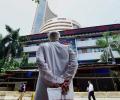
In three of the past four years, 10-year returns have been 10 per cent or lower, making equity unattractive, compared to other asset classes.

There will be pressure on the fiscal situation, especially at a time when the monsoon can also disappoint. More populist expenditure is on cards if the mandate is a hung Parliament or a coalition government.

The liquidity crisis at Dewan Housing Finance Corporation Limited (DHFL) has dented the fortunes of ace investor Rakesh Jhunjhunwala, who increased his stake in the troubled company in the March 2019 quarter (Q4FY19).

At the 45th Annual General Meeting of Reliance Industries (RIL) in August, chairman and managing director (CMD) Mukesh Ambani described the company as an "unputdownable book" with never-ending chapters of success. "Reliance grew from strength to strength because we internalised the founder's mindset of purpose, philosophy and passion," he said. Wednesday marked the 90th birth anniversary of RIL founder Dhirubhai Ambani.
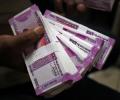
While Mcleod Russel, ADF Foods, Indiabulls Real Estate, DCM Shriram and BSE have announced buyback through open market route, the remaining 23 companies plan to buy back their shares via tender offers